Charlottesville's resources are strong. They are not coordinated.
Students in Charlottesville face persistent and widening disparities in early literacy and attendance. There is a 48-point gap in reading proficiency between Black and white students. At Trailblazer Elementary specifically, only 30% of Black students meet reading benchmarks, compared to 89% of white students. Across the division, more than 30% of Black students are chronically absent.
These gaps compound. Children who are not reading at grade level by third grade are more likely to struggle for the rest of their schooling. Chronic absenteeism in early grades predicts lower academic outcomes years later. Roughly 27% of local families cannot meet basic needs — and family instability shows up in the classroom before it shows up anywhere else.
Charlottesville has the nonprofit resources to address this. What's missing is alignment. Families navigate multiple systems independently. Services operate in parallel rather than together. Existing supports are underutilized because the path to them is fragmented.
Schools cannot solve these challenges alone — but they are central to the solution. PFS is built around that reality.
Education is a social issue and schools cannot solve these challenges alone — but they are central to the solution.From the PFS pilot proposal to Charlottesville City Schools
A two-generation model: support the student and the family together.
PFS aligns academic, behavioral health, and family supports into a single coordinated model, anchored at the school. Tutoring, enrichment, mental health services, workforce pathways, and early childhood connections operate as one continuum, not five separate programs.
Intake happens through trusted partner organizations or school referrals. From there, families are connected to the right resources at the right time — without retelling their story to each agency.
A shared data infrastructure, built on SmartSheets and the Network2Work platform, lets partners coordinate across services, follow every referral through to its outcome, and track impact together — so families aren't handed off and lost between agencies. Data sharing is consent-based, with privacy and ethical use as defaults.
The goal is straightforward: reduce duplication, improve coordination, and make sure families receive the support that already exists.
Fifty students, five afternoons, one coordinated model at Trailblazer Elementary.
Academic tutoring
Literacy-focused, small group. Aligned with classroom instruction and student need.
Enrichment & youth development
Arts and music, STEM and hands-on learning, physical activity and wellness, social-emotional learning.
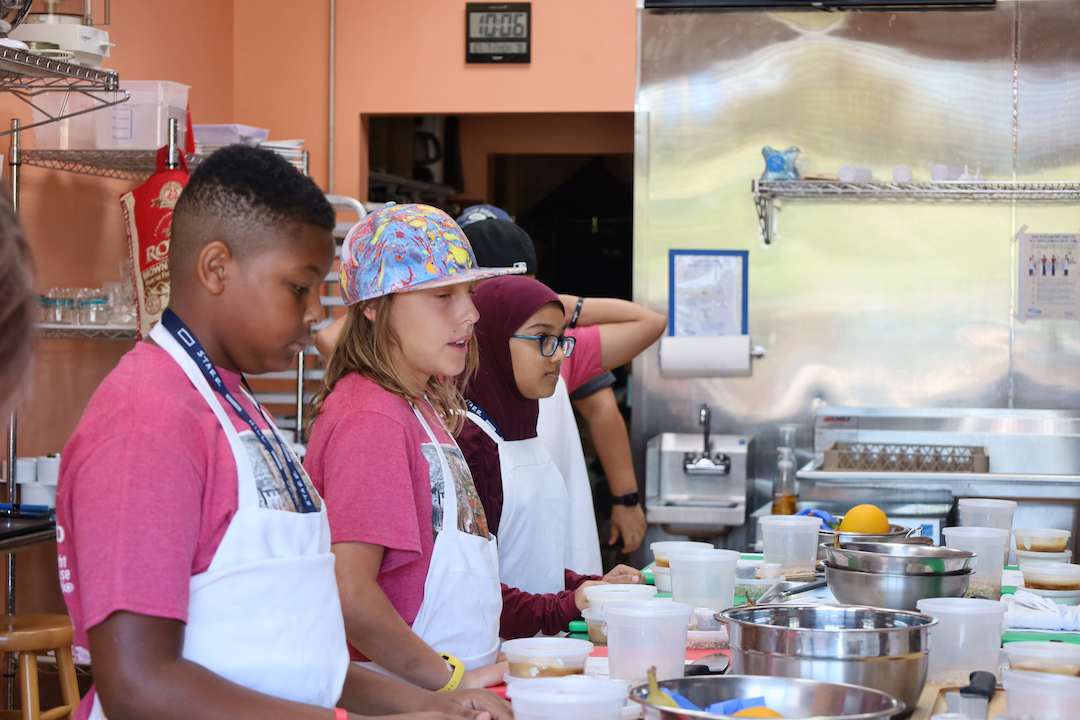
Alongside the afterschool program, PFS extends support to the whole family. Behavioral health services are available to students and caregivers. Parents have access to workforce and economic mobility pathways through Network2Work. Younger siblings are connected to early childhood resources.
The pilot is designed to minimize burden on Charlottesville City Schools. Coalition partners lead implementation and coordination. There is no requirement for CCS to hire additional staff, contribute funding, or take on program operations. Estimated pilot cost of approximately $500,000 is funded through coalition fundraising.
From approval to a full school year of delivery.

Approval & planning
Spring–Summer 2026. CCS partnership approval. Final planning, staffing, and partner coordination ahead of launch.
Pilot launch
Fall 2026. Program begins at Trailblazer Elementary, serving up to 50 students K–5.

Ongoing delivery
2026–2027 school year. Continued program operations with quarterly evaluation and reporting from Virginia Center for Community Partnerships.
What we'll track, and what we'll report back.
Want to be part of this?
Whether you're a school administrator, a potential funder, a partner organization, or a family seeking services — we'd like to hear from you.